EAL trainingat Shakti Ranch
In the Santa Monica Mountains, Malibu
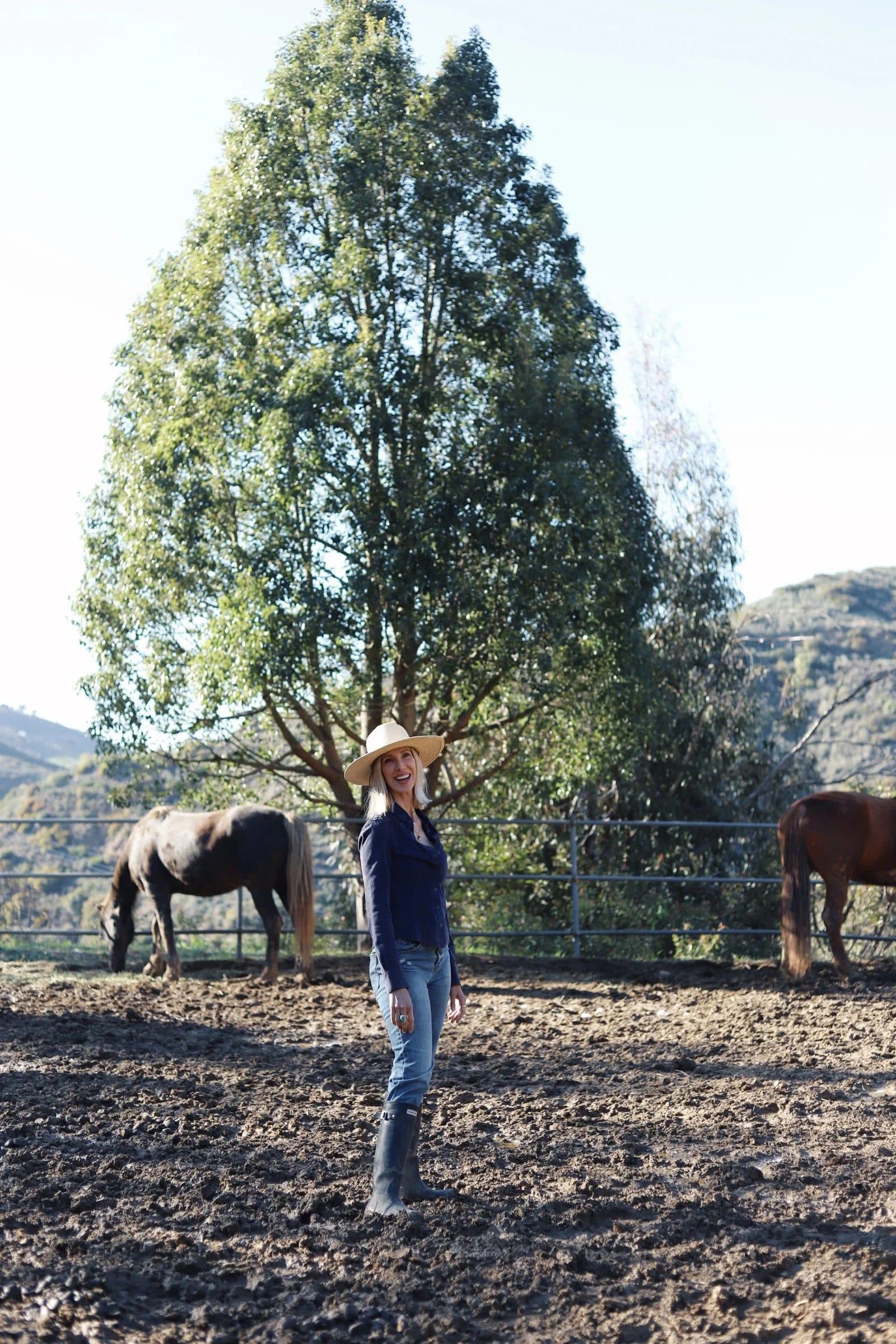
Fifteen acres, four horses, and room for a small group to work without being watched by anybody else. Everything on this page happens here.
Equine Assisted Learning
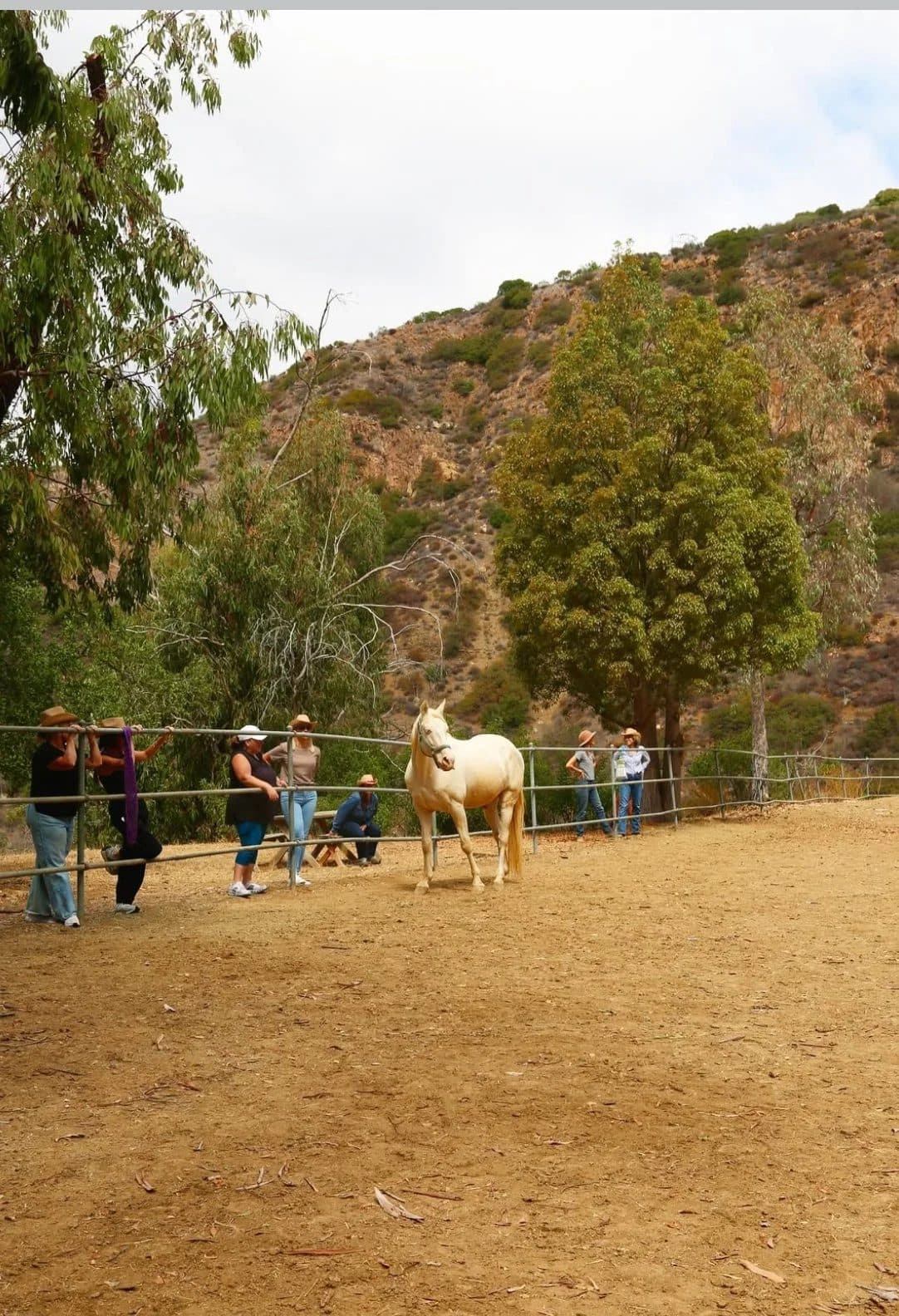
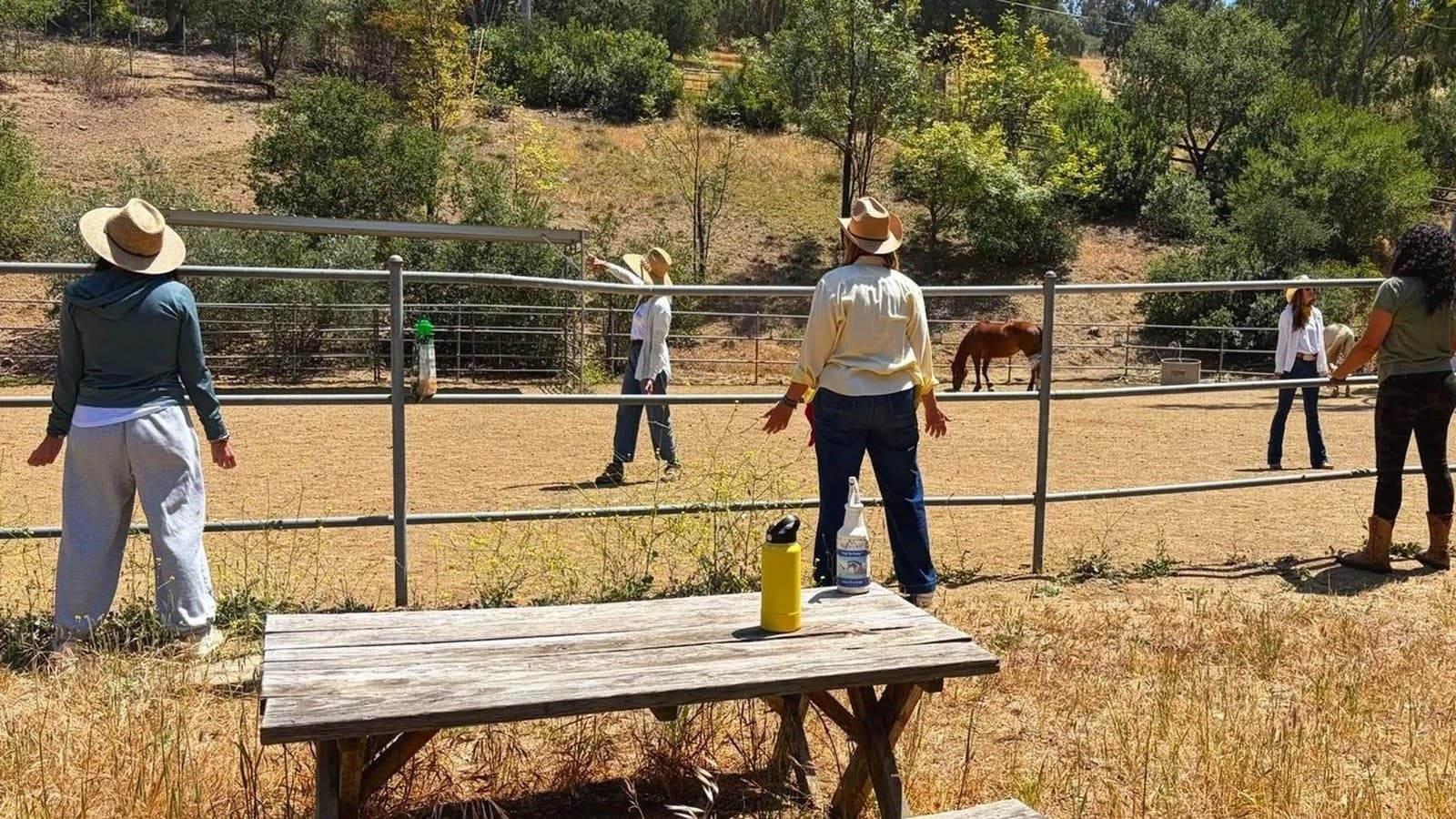
Equine Assisted Learning is work done on the ground with horses, where what happens between you and the animal is the lesson. Unimpressed by titles, status, or carefully crafted personas, they respond instead to presence, clarity, and intention, and because they hold zero judgement, what comes back is honest. As you work alongside the herd, patterns emerge that are often difficult to pinpoint in everyday life.
- On the groundNobody rides. The work happens on the ground, alongside the herd.
- No experience neededMost people who come here have never handled a horse, and nothing in the work assumes you have.
- Partners, not toolsWe approach horses not as tools or mystical entities, but as wise partners.
- Nobody is pushedYou are never moved toward an animal you are not ready to stand near.
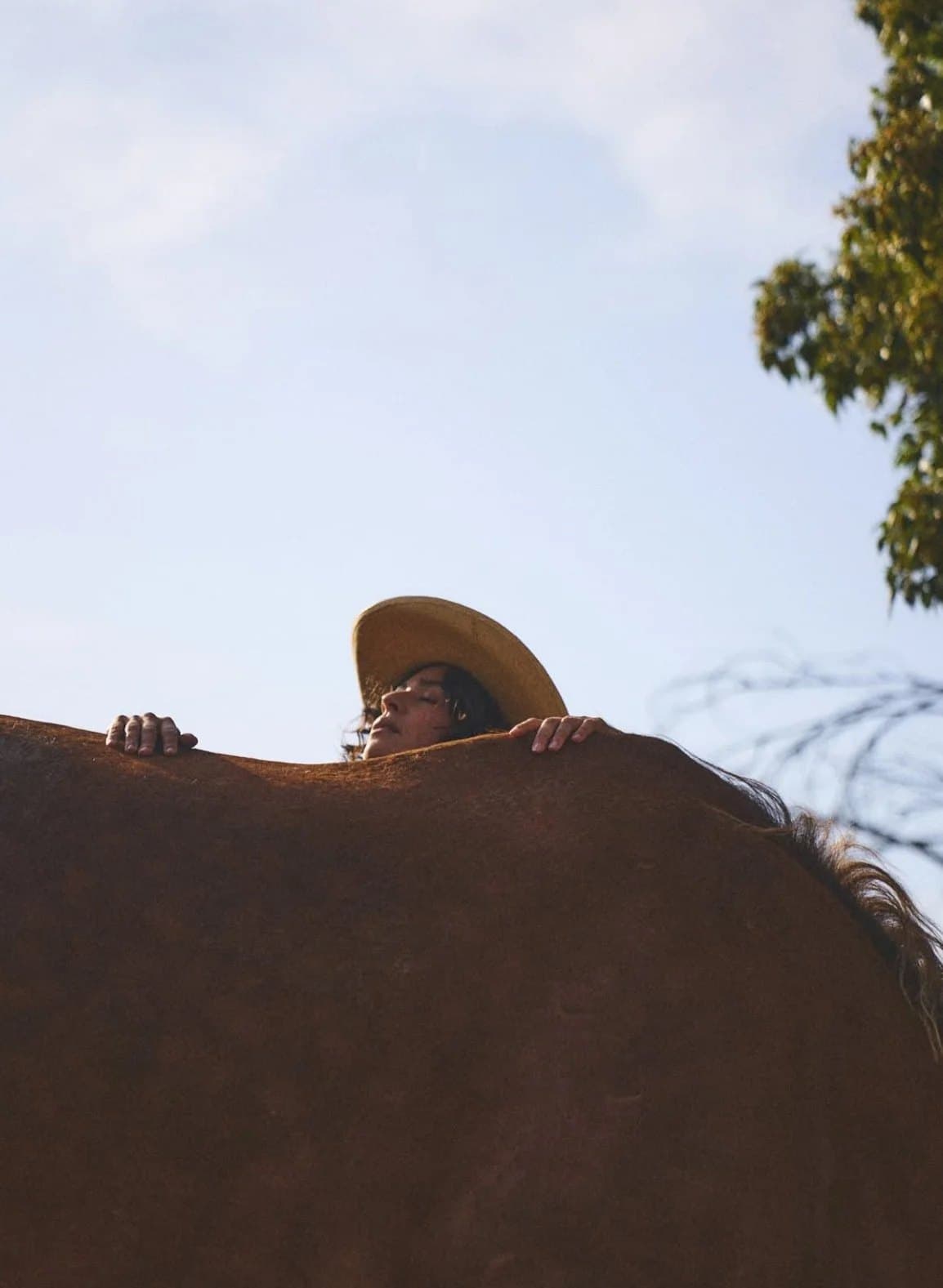
A horse reacts to how you actually are, not to how you are trying to seem. You can walk in acting calm, and it will still answer the part of you that is not.
What people learn about themselves here does not stay here. They tell us it shows up at work first, then in the conversations they had been avoiding, and then at home.
None of that depends on what you do for a living. People and horses have been reading each other for thousands of years, long before anyone gave it a name.
Executive teams, elite performers, clinicians, and athletes come here. So do people who simply wanted a morning in the canyon. Whether you arrive with a group or on your own, there is a place for you.
Become an EAL Facilitator
A two-part path to becoming an Equine-Assisted Learning Facilitator for mental health professionals, coaches, and horse lovers.
Everyone starts at Level 1. It is a complete thing on its own, and it is the only way into the Level 2 certification, which is taught in intimate cohorts here at the ranch. Level 1 is led by Rose Mary Riggs with Angela Schellenberg, MA, LMHC, LPC, LPCC. Level 2 is led by Rose Mary with Dr. Emma Barnosky, PhD, SEP.
“Student success, competence, and individuality is of paramount importance to us here at the ranch. The program is designed to help participants develop the discernment, confidence, and skill to find their own facilitation style while working effectively with both horses and people.”
“Rose Mary’s teaching style is supportive, caring, and always trusting and encouraging. She truly wants us to reach our highest potential. I was given the freedom to explore what I was most interested in and provided guidance and flexibility when I needed it. I looked forward to every workshop and benefitted both personally and professionally from each one.”
Enrollment
Everybody starts in the same place
Level 1 is where this work starts: a live half day learning to read a horse and to notice what it reads in you. Licensed clinicians can take it for continuing education hours. It is also the prerequisite for the certification, so everybody who trains here begins in the same room.
01
Level 1
EAL Foundations
A live half day in the foundations of this work: how horses read us, and what happens when you stand next to one on purpose. You need no horse experience and nothing to bring. Continuing education hours are available for licensed clinicians.
- Live on Zoom$397
- In person at the ranch$750
Next cohort: December 12, 2026
Enroll in Level 1Enrollment and the continuing education hours are held by Dragonfly LLC and taken on Angela Schellenberg’s site.
02
Level 2
EAL Certification
Five months. Five modules over the first four, on the second weekend of each, in a cohort small enough that everybody gets the floor. Then a workshop you design, fill and lead yourself. You leave a Shakti Ranch Certified EAL Facilitator.
- Tuition$5,355
- Paying by bank transfer$5,200
- The extra equine therapy sessions and horsewomanship lessons are billed separately
Next cohort: Friday, November 13, 2026. Level 1 first.
Level 1 first: it is the prerequisite, and enrolling here assumes you have it. Tell us if you are not sure and we will check before you pay. Terms and what happens if you have to withdraw are on the cancellation page.
On the calendar
Upcoming trainings
Level 2
EAL Certification
Friday, November 13, 2026
The second weekend of each month, at the ranch
Level 1 first: it is the prerequisite.
$5,355, or $5,200 by bank transfer
Enroll in Level 2Level 1
EAL Foundations
Saturday, December 12, 2026
Live on Zoom, or in person at the ranch
Enrollment and the continuing education hours are held by Dragonfly LLC, on Angela Schellenberg's site.
$397 on Zoom, $750 at the ranch
Enroll in Level 1
Dates fill. If neither of these works, tell us and we will let you know when the next one opens.
What Level 1 is
A live half day, nine until one, in person at the ranch or on Zoom, with self-paced lessons to keep.
Rose Mary created this style of equine assisted learning and leads the day. Angela Schellenberg, MA, LMHC, LPC, LPCC, co-facilitates, and her practice is the approved provider of the continuing education hours. Three modules, twelve lessons: EAL Fundamentals & Ethos, Integration with Nature, Embodied Movement.
You leave with the Shakti Ranch Level 1 certificate of completion. That is a real thing and it is not an equine assisted learning certification. The certification is Level 2. This is where that path starts, not where it finishes.
Who it is for
- Anyone drawn to working with horses, with no therapeutic background, license or horse experience
- Therapists and counsellors who want to bring horses into the way they work
- Coaches and grief workers who want a grounded, ethical foundation for equine work
- Healing practitioners drawn to nature-based and embodied approaches
What you leave able to do
- Define the evolution of the horse-human partnership
- Identify the ethical responsibilities of an EAL facilitator
- Apply five-senses grounding and the Nature Grid
- Demonstrate facilitator neutrality and embodied presence
Level 1 stands on its own, and plenty of people stop there. Going on to Level 2 is always your choice. It is the natural next step for anyone who wants to hold sessions of their own, and Level 1 is the only way into it.
A training day, hour by hour
- 8:45Arrival and sign-in
- 9:00Welcome, and the history of the horse-human partnership
- 9:30What equine assisted learning is, ethics, and the facilitator's role
- 10:00Horses as emotional mirrors: meeting the herd
- 10:45Break
- 11:00Somatic movement
- 11:45Sensory awareness, grounding, and the Nature Grid
- 12:15Facilitator practice: co-regulation and the animal body
- 12:45Closing circle and integration
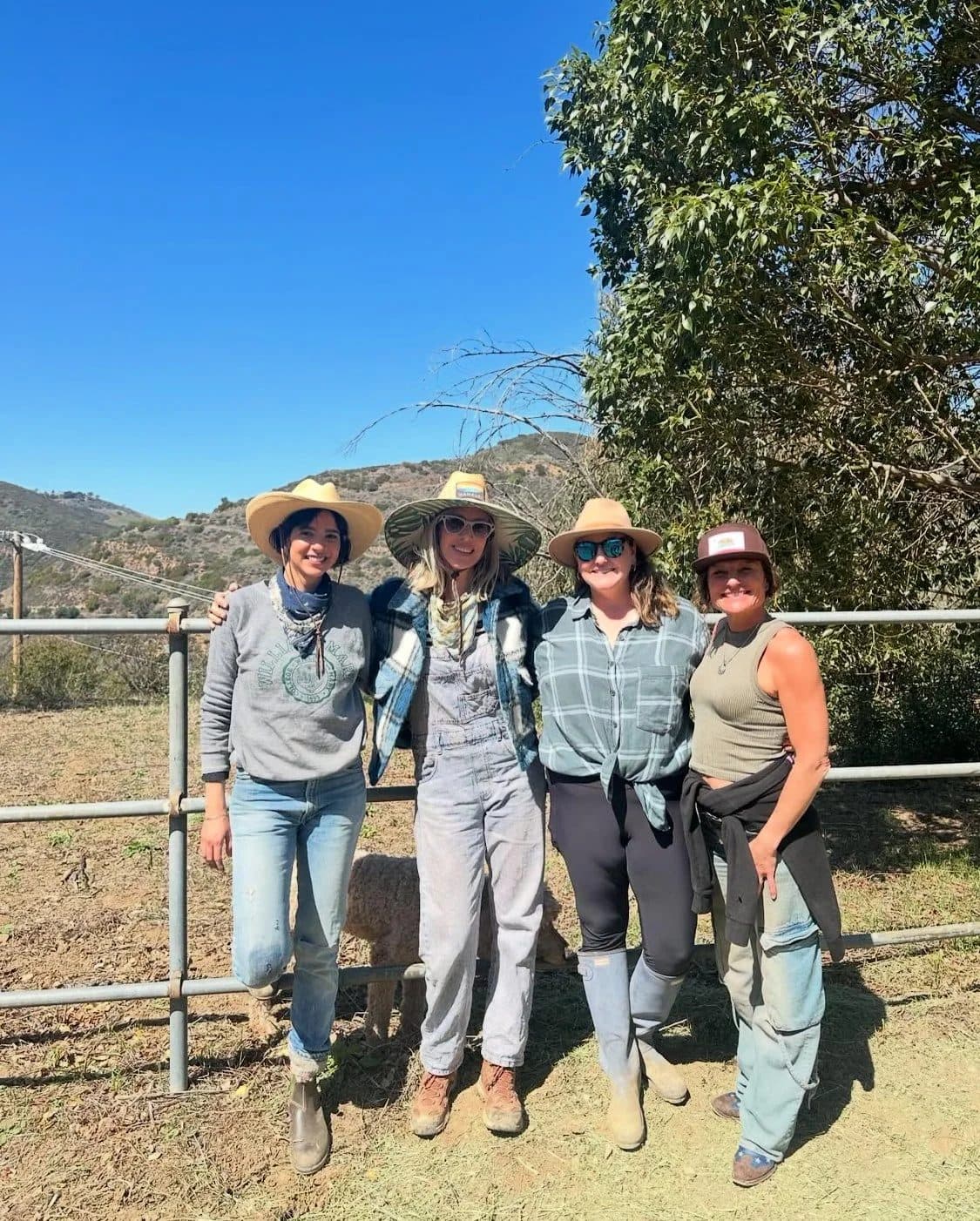
Level 2 is built for practitioners ready to lead
For anyone who has completed Level 1
No formal horse experience and no mental health credential is required, though anyone short in one area or the other may be asked to do additional mentorship so the program actually works for them.
Therapists and clinicians
Licensed practitioners looking to bring EAL work into their own clinical setting.
Coaches and somatic practitioners
Professionals ready to add embodied, horse-guided facilitation to their practice.
Allied health professionals
Physical, occupational and speech therapists and other related practitioners looking to expand their scope with a trauma-informed modality.
Horse lovers and equestrians
Riders and lifelong horse people ready to turn their bond with horses into a pathway for helping others heal.
Level 2 certification
What it asks of you
Alongside the eight teaching days, certification carries four standing requirements. They are what turn five months of coursework into somebody who can hold a session on their own.
4 sessions
Observation and assisting
Live observation or assisting with real client groups, learning directly from staff. You can move between facilitators to see different styles, or stay with one weekly group and deepen the practice with familiar mentorship and clientele.
4 sessions
Peer-to-peer practice
Structured sessions at the ranch with a classmate, to test what you are learning, get real feedback, and build confidence before working with clients of your own.
2 to 3 sessions
Private EAL sessions
One-to-one time with a staff member, built around what you want and where you are as a facilitator. The first, with Rose Mary, is included in tuition. The rest are with the staff member of your choosing and are billed separately.
1 to 2 lessons
Horsewomanship lessons
One-to-one instruction in how to communicate and build a consensual, practical partnership with horses, tailored to what you already know. Billed separately.
Your capstone
It ends with a workshop entirely of your own design, which is the closest thing to stepping into practice as a certified facilitator before you actually are one.
Design
An original workshop or session of your own, from the ground up. You choose the format: one client, or a group.
Market
Fill it yourself, from your own clientele, new or existing.
Facilitate
Run the whole thing independently, with staff supervision.
Submit
Submit for review, and receive your certification sign-off.
“This certification program not only expanded my knowledge and understanding of equine-assisted learning, but also provided me with profound insights into myself. Rose Mary was always accessible and took the time and care to make sure each of us felt confident and fully prepared to embark upon our own journey into the profession of equine facilitated learning.”
Before you come
What to bring on training days
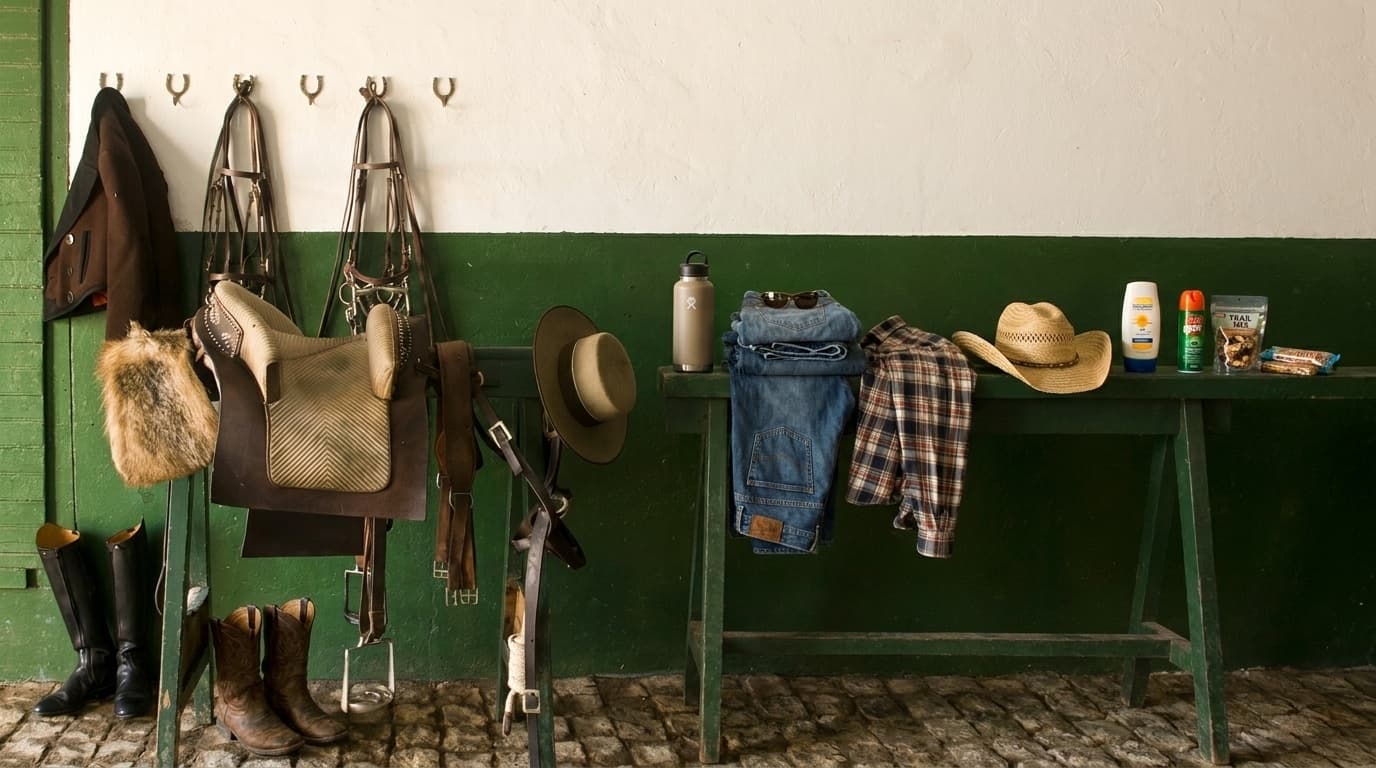
Everything on the bench. Nothing here is special equipment, and none of it has to be bought: it is what you would wear to be outside in the hills for a long day, in closed-toe shoes you do not mind getting dirty.
The people who teach it
Why take this training from the Equine Therapy Malibu team
A licensed psychotherapist, a somatic practitioner with a PhD, a working facilitator, and the founder who built the program. Three of the four also certified here, which is the only proof of a training that means anything.
Where does this lead?
“So many of my students have gone on to either create their own business, or become a staff member here at Equine Therapy Malibu.”
Rose Mary Riggs
Founder & Owner. Two decades with horses in these mountains, after a career in change management at Accenture.
Both levels, from the inside
“At the end of my certification I truly felt confident and competent running groups on my own.”
Dr. Emma Barnosky, PhD, SEP
Lead facilitator, trainer and program director. Certified here first.
What was it actually like?
“She champions each one of us to find your own gifts, your own voice, and your own way of bringing this work out into the world.”
Eloisa Ribeiro
Equine Assisted Learning Facilitator. Certified here in 2025, now on staff.
Why a clinician does this
She specializes in grief, PTSD and complex trauma, and she brought that practice out here.
Angela Schellenberg, MA, LMHC, LPC, LPCC
Co-leads Level 1 with Rose Mary. Her Healing with Horses retreat at the ranch was recognized by National Geographic.
What graduates say about the certification
“Working with and learning from Rose Mary gave me the confidence to start my own practice.”
Robin Rick, Shakti Ranch Certified EAL Facilitator
After the certification
What people built with it
Some people take this to deepen work they already do. Others arrive wanting to change what they do for a living. Three who did.
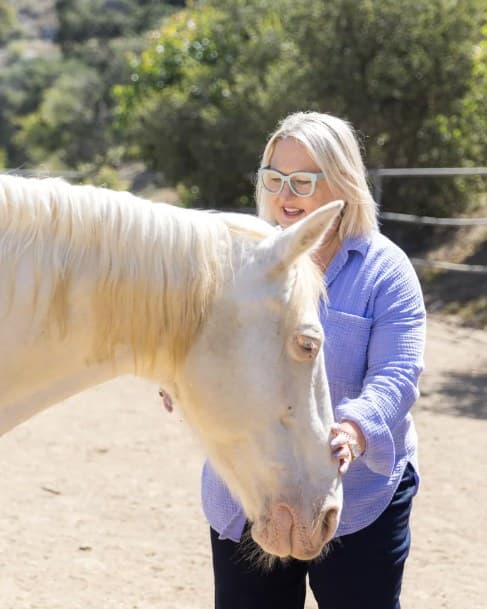 Angela SchellenbergBefore: A licensed therapistBuilt Healing with Horses on this certification, a somatic grief retreat that runs at Shakti Ranch. National Geographic named it among the world's best grief retreats, best for equine therapy.
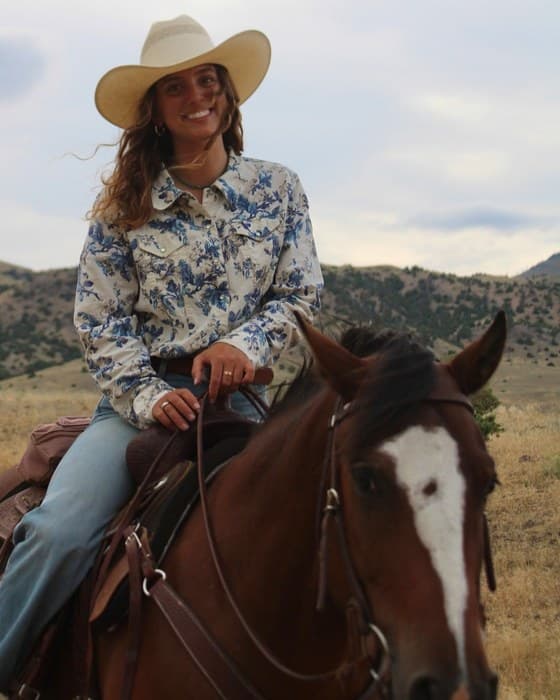 Olivia AutoreBefore: A business degree and a corporate career in New York fashionCertified here in 2025 and developed her practice on a nonprofit ranch in Montana. She now works with adolescents and women who feel stuck or burned out.
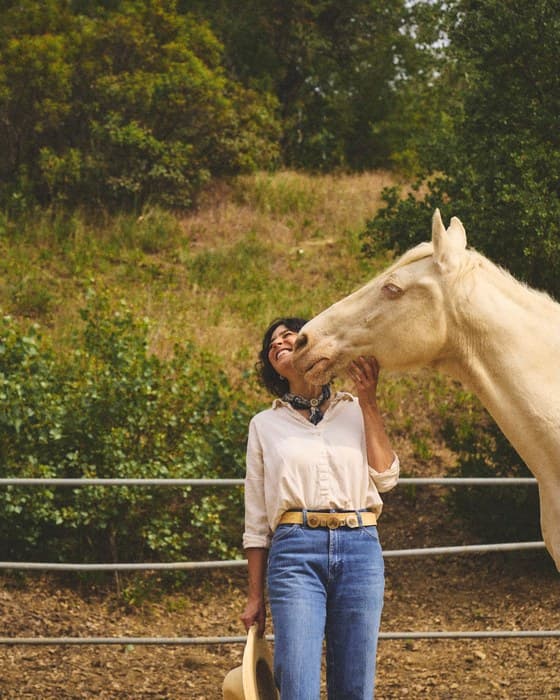 Eloisa RibeiroBefore: A family farm in Brazil, and no therapeutic backgroundA certified Shakti Ranch EAL facilitator working with individual clients and with corporate groups.
Ways you can use your EAL certification
What you do with it depends on why you came. For most people who train here, money is not the first answer.
- If you already have a practiceBring this into the work you already do. Level 1 carries continuing education hours, and you leave with something to offer a client who has stopped getting anywhere in a chair.
- If you coach or run groupsHold your sessions out here with the horses instead of around a table. Groups reach things in an afternoon in a round pen that a meeting room does not reach in months.
- If you are changing careersBuild a practice of your own, under your own name, in your own market. What you charge is yours to set.
- If you want your own staff trainedYour team learns to run this work themselves, so it carries on in-house instead of costing you an outside facilitator every year.
- If you came for yourselfYou never have to do anything with it. Plenty of people take Level 1, never lead a session, and still leave knowing more about how they land in a room.
The waitlist
Hear about the next training first.
Dates, both levels, and the odd place that opens up late. Nothing else.
Before YouEnroll
I don't have my own horses. Can I still do this?
Yes, and most people who train here do not own a horse. The certification is yours and it travels: graduates facilitate wherever they arrange to, at a barn, a center, in partnership with an owner, or alongside a practice that brings its clients to a facility.
Shakti Ranch is also open to graduates who want to run their own programs here, on these horses, in this canyon. Ask us about that when you apply.
Do I need to be a licensed therapist or clinician?
No. You do not need to be a therapist, a coach, or hold any clinical license or credential. Level 1 is open to anyone, and Level 2 is open to anyone who has completed Level 1.
What changes without a license is not whether you may do this work, but what you may call it and who you should refer on. Equine Assisted Learning is learning rather than treatment, and holding that distinction is part of what the certification teaches.
Do I need any experience with horses?
No. Most people who come here have never handled a horse, and nothing in the work assumes you have. The herd does not care what you know about them. They respond to how you carry yourself, which is a thing you already have with you.
What does Level 1 qualify me to do?
You leave with a Shakti Ranch Level 1 certificate of completion, which is a real thing and is not the same as a certification. It qualifies you to bring what you have learned into work you already do, and it is the prerequisite for Level 2. Plenty of people stop there, and that is a complete thing to do.
What does Level 2 qualify me to do?
You leave a Shakti Ranch Certified EAL Facilitator, able to design and hold equine assisted learning sessions of your own. It is not a license to practice psychotherapy and does not stand in for one.
Do the continuing education hours count for my license?
Level 1 carries optional NBCC continuing education credit for licensed clinicians, issued by Dragonfly LLC, Angela Schellenberg’s practice, which is the approved provider and handles enrollment. The course is the same with or without it. Whether NBCC hours satisfy your particular board is a question about your license rather than about this course, so check with your board before you enroll and tell us when you do.
How much time does Level 2 actually take?
Five months. Five modules over the first four, then the capstone. Participants come to the ranch on the second weekend of each of those four months for six to eight hours of instruction on Friday and Saturday, which is eight teaching days. Between weekends there is a monthly peer support call, four sessions observing or assisting a real client group, four peer-to-peer practice sessions, and one-to-one work with staff and horses. It ends with a workshop you design, fill and lead yourself.
Can I pay for Level 2 over time?
Yes. A deposit holds your place and the balance can be paid across the program. Tell us what works when you apply.
Is the tuition the whole cost of Level 2?
Nearly. Tuition covers eight teaching days, four peer-to-peer practice sessions, four sessions observing or assisting a real client group, and one private EAL session with Rose Mary. Every participant also takes one or two further private EAL sessions and one or two horsewomanship lessons, and those are billed separately. How many you need is set by the certifying staff from your experience and your progress, so we would rather tell you it exists than surprise you with it.
Can my whole organization train together?
Yes, and it is some of the work we are proudest of. We run the training for a single organization’s own staff, built around what that service actually needs rather than adapted from somebody else’s program. It starts with a call. Tell us about your organization and we will take it from there.
Is this therapy?
No. Equine Assisted Learning is learning: nobody is diagnosed and nobody is treated. What is worked on is awareness, communication, and how a person handles themselves. Clinical work at the ranch is a separate thing and is held by licensed staff.
Something not here? Write to us and we will answer it properly.