Equine therapysessions at Shakti Ranch
One person, a couple, or a group
Fifteen acres, four horses, and a stretch of the day that belongs to one person or to the few people who came with them: a session here is the smallest way into this work, and the quietest. We work on the ground rather than in the saddle, and which of the herd comes over, and how, is what the session is made of.
What a session is
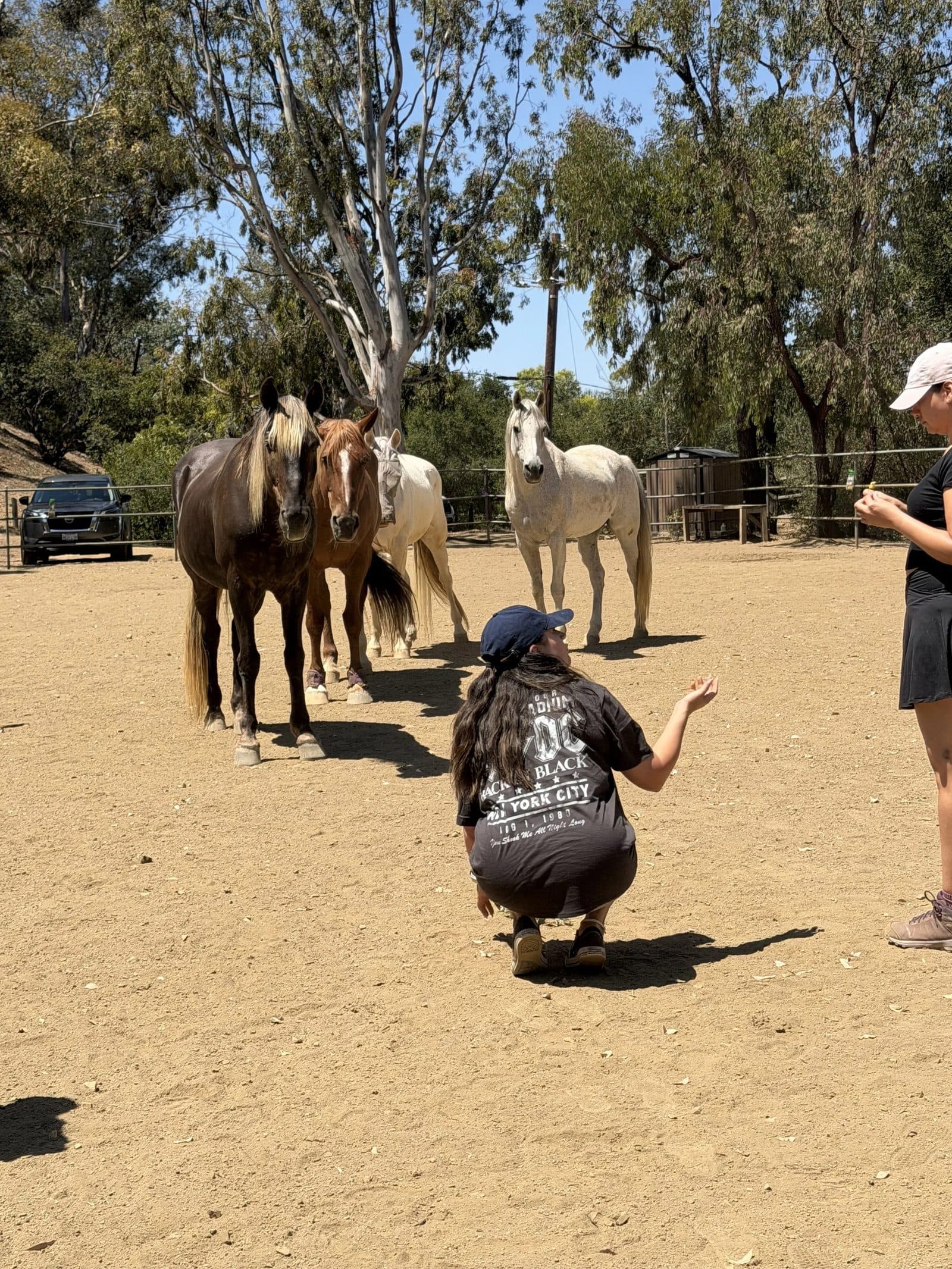
Time on the ground, alongside the herd
No riding, no experience needed
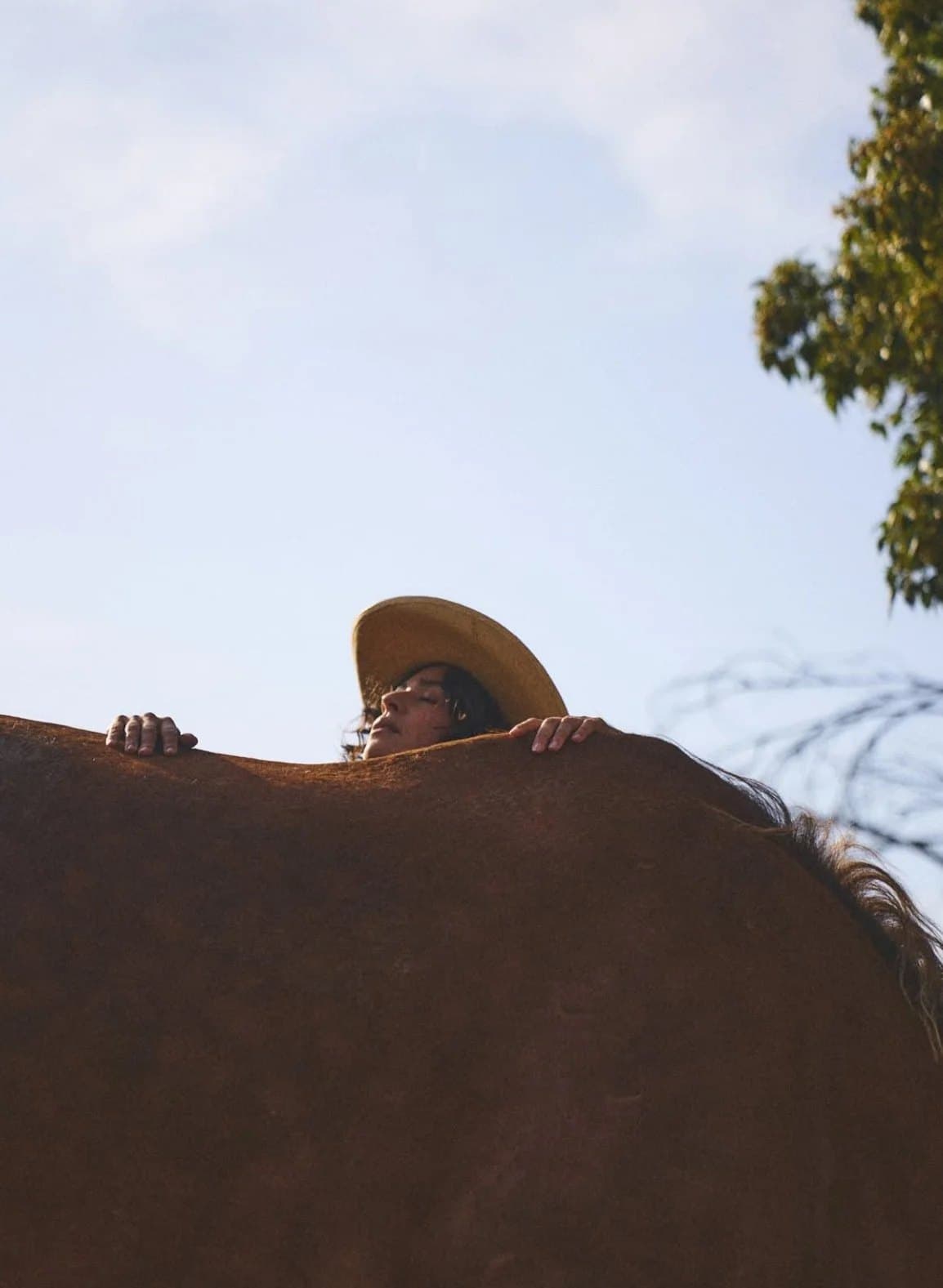
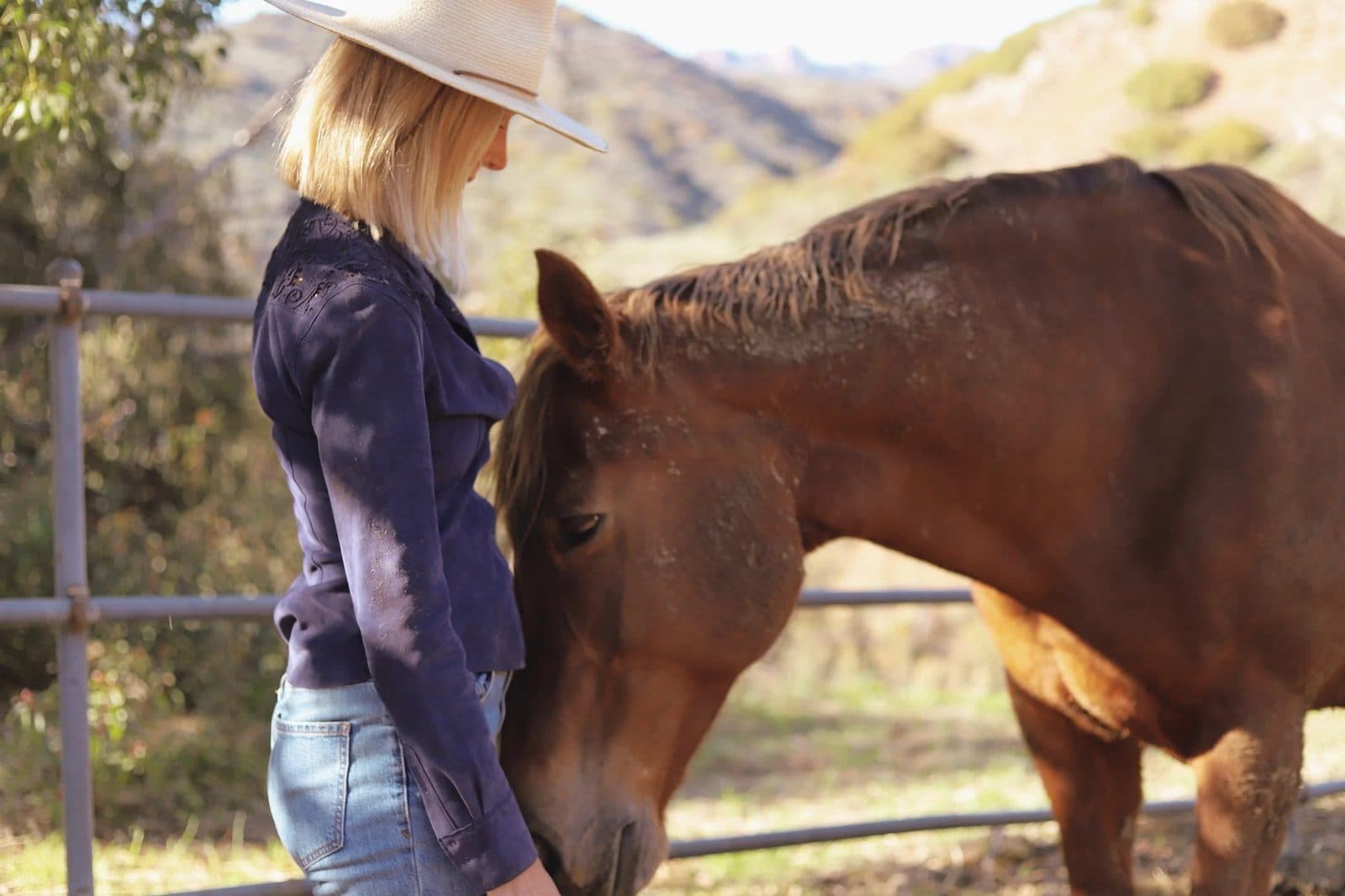
Everything happens on the ground, alongside the horses rather than on their backs, so nobody needs riding experience and nobody needs to have been near a horse before. This is not a lesson delivered at somebody, but time the herd shapes as it goes: Frankie is usually the first to approach a person who arrived nervous, and Cash has a way of finding whatever a room is stepping around.
We cannot say in advance what a horse will offer any particular person, and that is the honest part of it: what turns up is usually something nobody would have thought to book a session for.
One to one
1 person
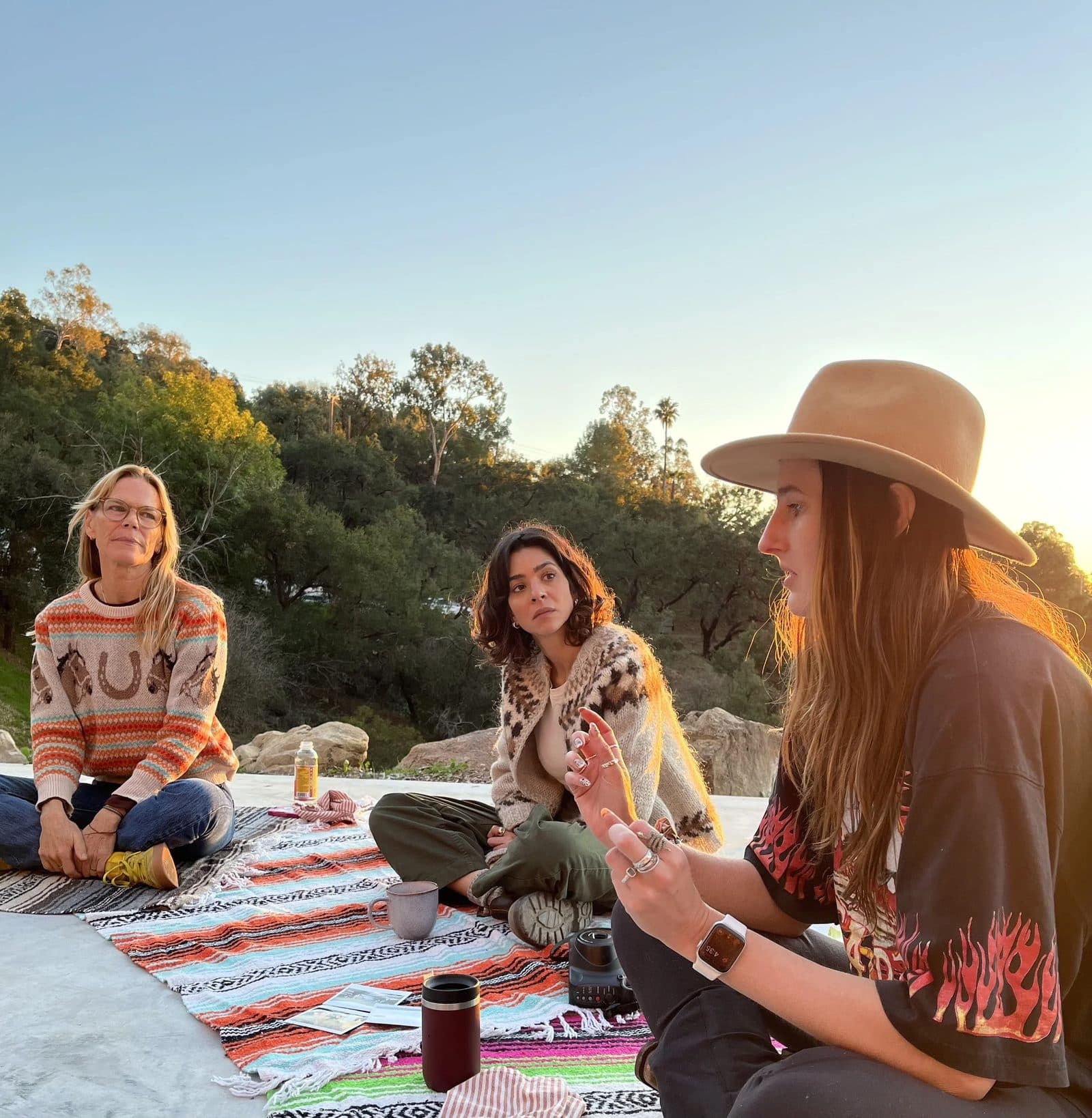
Most people start here, on their own with one facilitator and the herd. The longest of them runs three hours and is built for a first visit, because meeting four horses and finding your feet on fifteen acres is not an hour's work.
Couples
2 people
Two people who arrive as a pair: a marriage, a parent and a grown child, two people who run something together. The horses answer both of you at once, which is a different thing from taking turns being heard.
A group
3 to 12 people
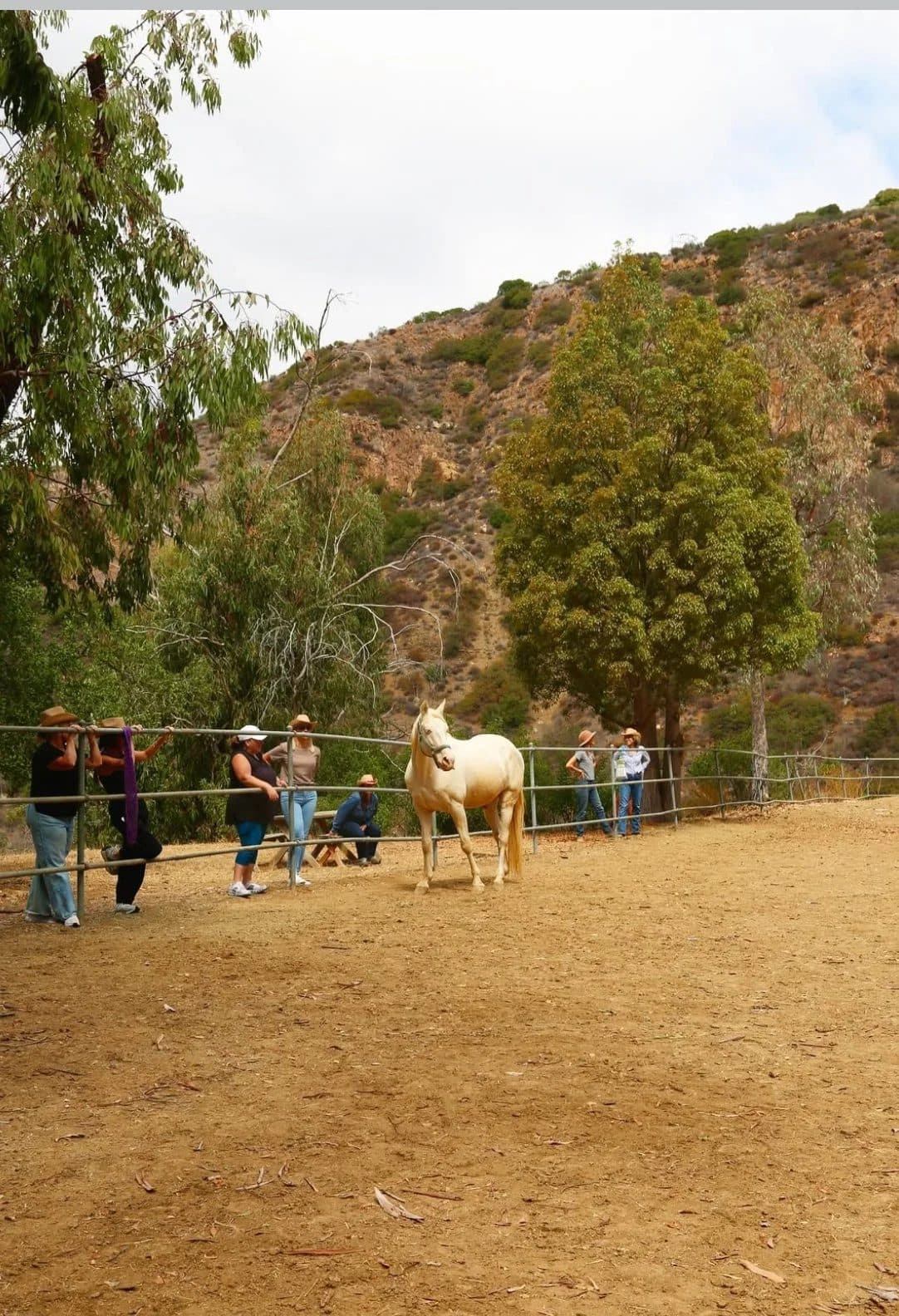
Your own people, from three of you up to twelve: a family, a team from work, a cohort from a treatment center, or friends who wanted a day out here. How many of you there are decides which horses go out, so we ask before we set a date.
What the horses guide us towards
Mirroring is the word for something horses do without being asked. A horse responds to the state a person is actually in rather than to what they say or intend, so the way it behaves near somebody becomes information about them. Arrive braced and holding it together, and the horse answers the bracing.
What makes it useful here is that the herd does not respond uniformly. Each of these four is tuned to something different, and what they show you arrives through their own temperament.
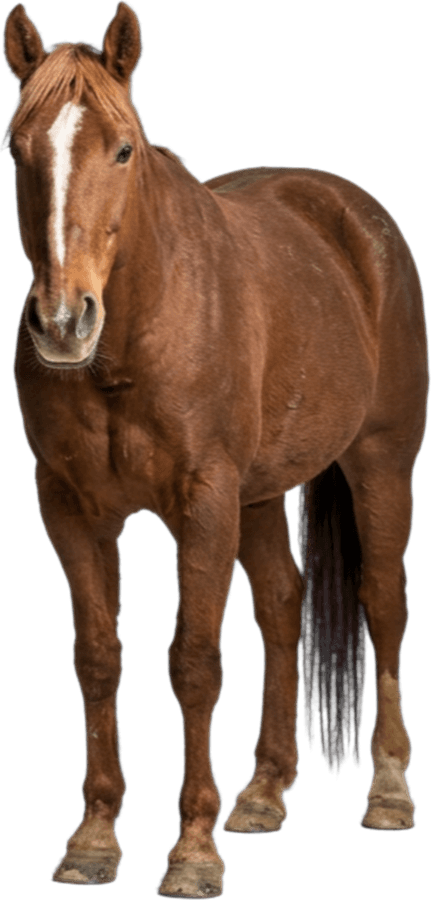 SophieThe Lead MareTakes in someone's anxious or unsettled energy and hands it back grounded and calm.
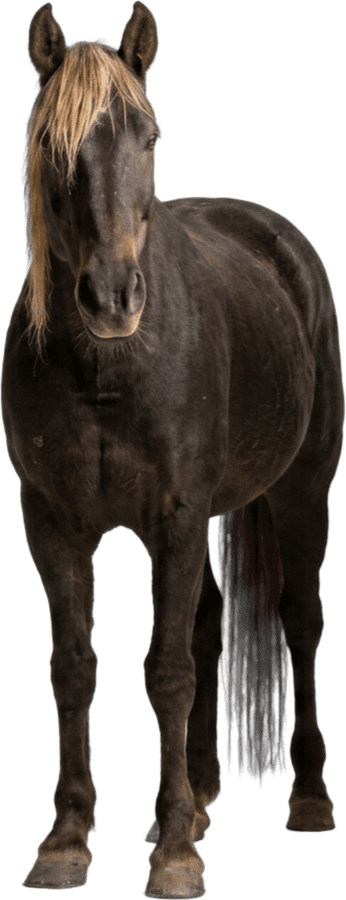 CashThe Straight ShooterIdentifies exactly what a person or a group is avoiding, or where they lack boundaries.
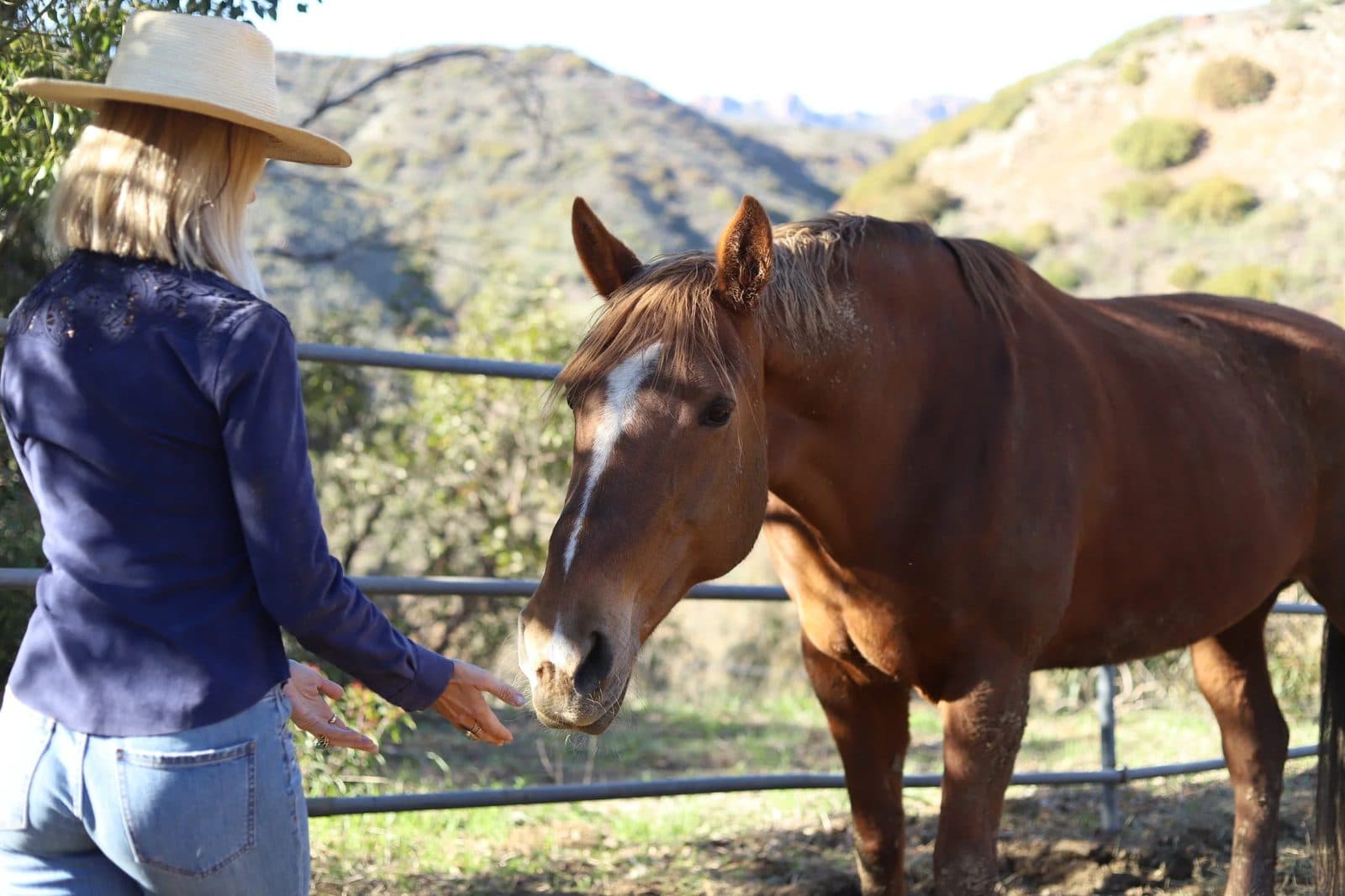
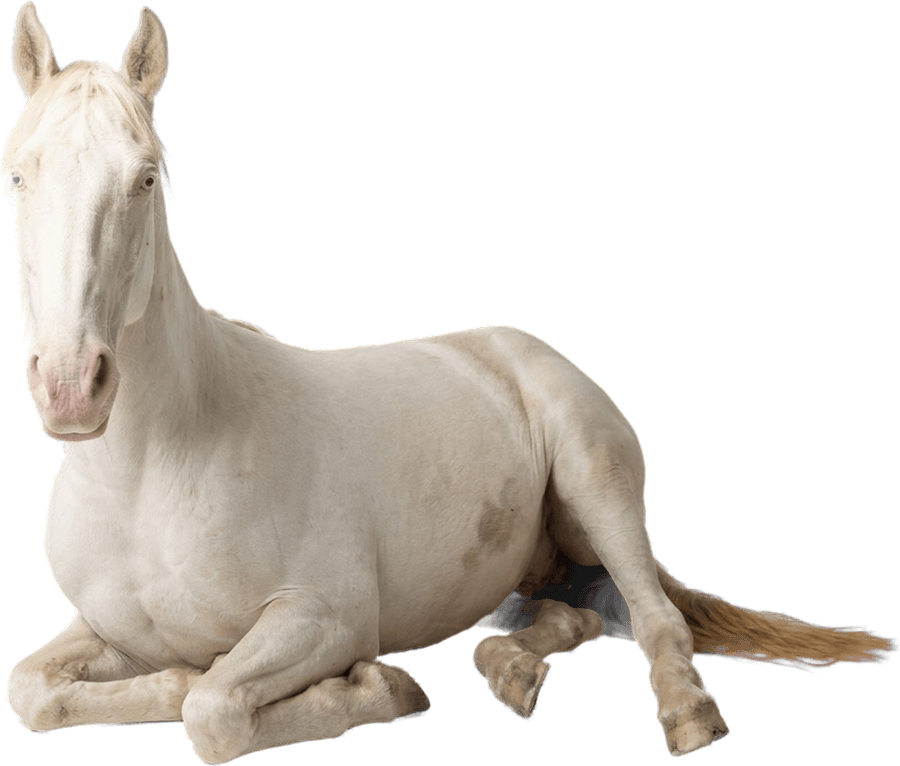 FrankieThe IcebreakerThe fastest of the herd to approach someone new, and the usual starting point for anyone nervous about horses at all.
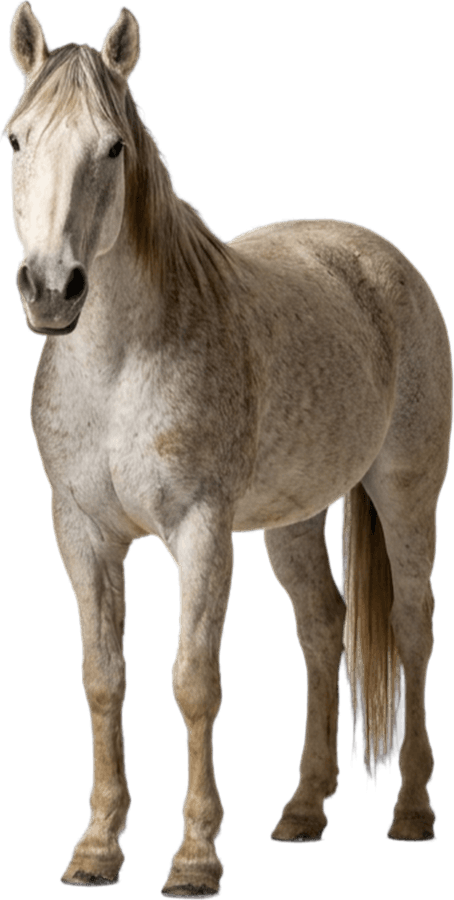 AbeThe Steady OneA steady, unshakeable presence that a group arriving already running hot can borrow from.
Which of them comes over, and how, is part of the work. Meet the herd.
Sessions and rates
Choose who is coming, then a session
The prices are stated rather than calculated, and nothing here totals up while you read. Choose who is coming, then the session, and the button takes you to the scheduler for a date.
Choose a session to book.
More than twelve of you, or something not listed here? Write to us and we will build it around you. A session is paid for when it is booked, and how moving or cancelling one works is on its own page.
Sessions are held by Rose Mary Riggs and by our staff facilitators. Clinical therapy is a separate thing, and it is held by Angela Schellenberg, MA, LMHC, LPC, LPCC, the licensed clinician on our team: if that is what you are looking for, say so when you write and we will tell you who would be holding it.
How it goes
From the rate card to the round pen
The booking settles the day and the hour, and very little else. The rest is decided on the ground, with the herd, once you are here.
Choose a session
Who is coming decides which of the sessions is yours: one person, a couple, or a group of your own people. The rate card sorts them, and nothing on it totals up or ticks over while you read.
Find a time
The button takes you to our scheduler, which holds the calendar and takes the payment. If none of the times work, or there are more than twelve of you, write to us below and we will find one together.
Come to the ranch
You arrive at Shakti Ranch in closed-toe shoes, with water and a hat with a brim. A facilitator meets you, and the herd meets you after that, in its own time.
Write to us
If you would rather ask first
If the times on the scheduler do not work, if there are more than twelve of you, or if you would rather ask something before you book anything, this comes straight to us.
Listen
Why Horses for Grief
Our founder, Rose Mary Riggs, went on Angela Schellenberg’s podcast to talk about grief, and what horses have to do with it.
Most people who come here are not horse people. They are going through something, and talking about it has only taken them so far.
Before you come
What to bring for a session
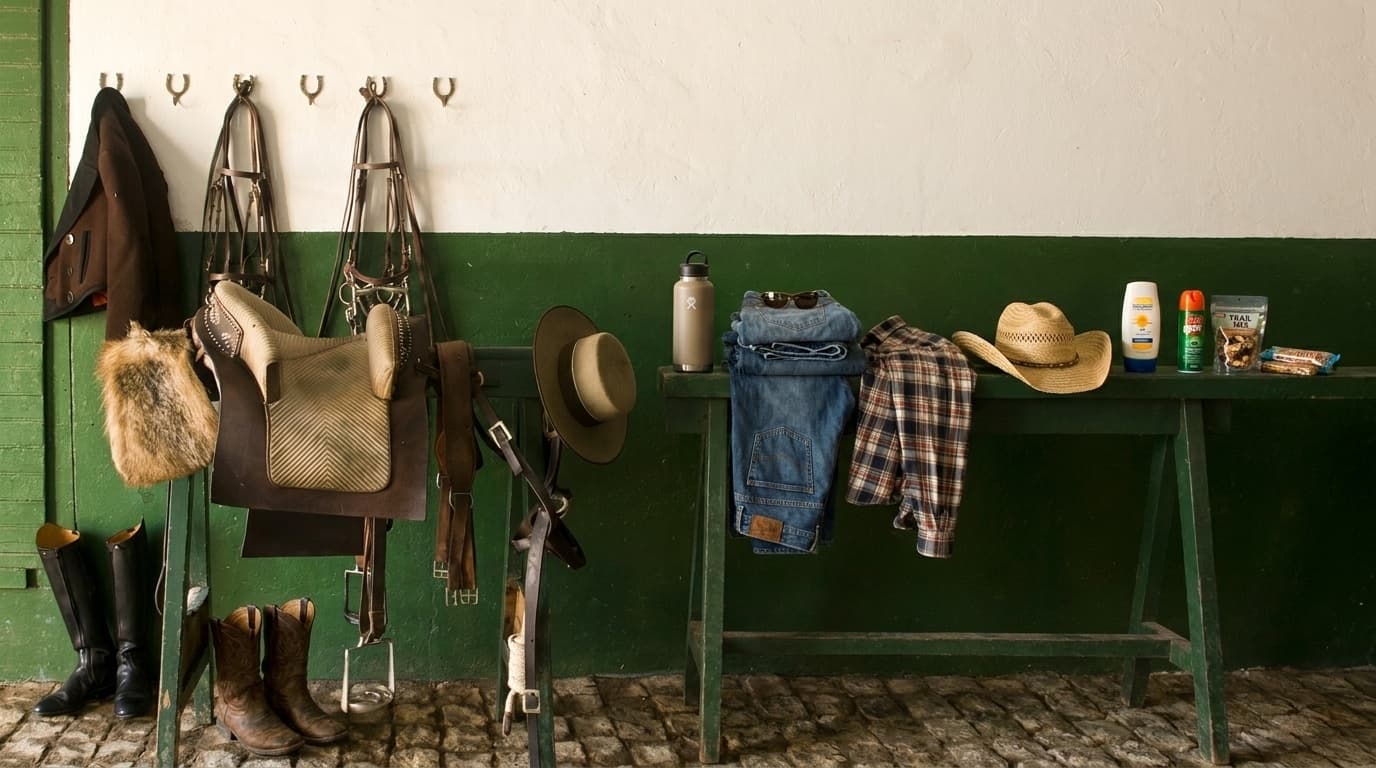
Closed-toe shoes you do not mind getting dirty, long pants, and a hat with a brim, because there is very little shade in the round pen. Bring water and a snack.
What clients say
“Rose Mary has the ability to help each person she works with to see the best in themselves and others.”
Julie McAfee, Women’s Empowerment Coach
Before youbook
Is this therapy, or is it something else?
It is both, and the difference is worth being exact about. Equine assisted learning is experiential work on communication, relational patterns, leadership and presence under pressure.
It is not psychotherapy, and it is what corporate & private groups and institutions are booking.
Equine assisted therapy sessions are also experiential. Private, couples, and group or treatment center sessions are guided by Certified Shakti Ranch EAL Facilitators.
Do I need any experience with horses?
No. Most people who come here have never handled a horse, and nothing in the work assumes you have. The herd does not care what you know about them. They respond to how you carry yourself, which is a thing you already have with you.
Will I ride?
No. All of it happens on the ground, alongside the horses rather than on them. That is what makes the work legible: standing next to a twelve-hundred-pound animal, your posture and your breathing become information you can actually read.
What if I am nervous around horses?
Bring that with you. Nerves are not a problem to get past before the work starts; they are usually where it starts. Horses read tension accurately and without judgement, which means a nervous first ten minutes tends to be the most useful ten minutes of the day. Nobody is pushed toward an animal they are not ready to stand near.
How long is a session, and what should I wear?
Most sessions run ninety minutes, and horse time tends to run long. The introductory session with Rose Mary runs three hours, the children’s session fifty minutes, and the larger group workshop two hours; the rate card gives each one. Closed-toe shoes you do not mind getting dirty, long pants, and a hat with a brim, because there is very little shade in the round pen. Bring water and a snack.
Something not here? Write to us and we will answer it properly.