Clinician trainingat Shakti Ranch
For licensed clinicians, in Malibu
Therapists, psychologists, social workers and counsellors train here alongside coaches, grief workers and lifelong horse people, and they all take the same two courses. What is different for a clinician is not the curriculum: it is the line you are already holding between learning and treatment, and who is answerable for which side of it.
Clinical work at the ranch is held by Angela Schellenberg, MA, LMHC, LPC, LPCC, the licensed clinician on the team. The training is led by Rose Mary Riggs, a Certified Equine Guided Educator.
Two words
Learning, therapy, and the line between them
What Rose Mary teaches is Equine Assisted Learning. Nobody is diagnosed and nobody is treated. A person works on the ground alongside horses who are unimpressed by titles, status, or carefully crafted personas, and who respond instead to presence, clarity, and intention, and because the horses hold zero judgement, what comes back is honest.
Clinical therapy at the ranch is a separate thing, held by licensed staff. If what a client needs is clinical work, say so when you write and we will tell you who would be holding it.
A certification in the first is not a credential in the second. Graduates leave Shakti Ranch Certified EAL Facilitators. They do not leave therapists, and the ones who already were arrive that way.
Rose Mary Riggs
Certified Equine Guided Educator
Founder of Equine Therapy Malibu and owner of Shakti Ranch. She created this style of equine assisted learning, leads Level 1, and leads the Level 2 certification.
Angela Schellenberg
MA, LMHC, LPC, LPCC
Licensed psychotherapist and trauma educator, and the licensed clinician on the team. She co-leads Level 1 with Rose Mary, and clinical therapy at the ranch is held by her.
Dr. Emma Barnosky
PhD, SEP
Lead facilitator, trainer and program director, a Somatic Experiencing Practitioner, and a PhD from UCLA. She leads Level 2 with Rose Mary. A doctorate and a somatic certification are not a clinical license, which is why all three of these lines say something different.
Arriving with a license
What is different for you
The training page answers the question most people arrive with, which is whether they need a clinical credential to do this. They do not. You are the other reader, and these are the four things that are yours rather than theirs.
Your scope stays your board’s
The certification adds a way of working and it does not widen the license you already carry. Nothing taught here authorizes anything your board does not already authorize, and what you may call this work, and what you may bill for it, is a question for your board rather than for us.
You are the one who can hold both
A licensed clinician can run a learning session on a Tuesday and clinical work on a Thursday, which is a thing a facilitator without a license cannot do. What it asks of you is that the client knows which of the two they are in, and that you knew before they did.
You are who the referral reaches
What changes for a facilitator without a license is not whether they may do this work, but what they may call it and who they should refer on, and holding that distinction is part of what the certification teaches. A graduate is looking for somebody like you before the two of you have ever met.
The training does not travel out intact
Horses are unimpressed by titles, status, or carefully crafted personas, and years of clinical training are all three of those things once you are standing in a paddock. Working alongside an animal that responds to your state rather than your account of it is different work from sitting across from somebody, and it is worth knowing that before you enroll rather than on the morning.
Where you would train
A license does not shorten the path
There is one way through and everybody takes it. The curriculum for both levels, the hour by hour of a training day, the cohort dates and what each level costs are all on one page, and they are kept there rather than repeated here so that there is only ever one of them to trust.
Level 1
A live half day in the foundations of the work, on Zoom or here at the ranch, and a complete thing on its own.
Level 2
The five-month certification, open to anyone who has finished Level 1, and enrolled on this site. It leaves you a Shakti Ranch Certified EAL Facilitator.
Level 1 carries optional NBCC continuing education credit for licensed clinicians, issued by Dragonfly LLC, Angela Schellenberg’s practice, which is the approved provider and handles enrollment. The course is the same with or without it. The prices, the dates and the credit option are on her Level 1 page.
Read the training in fullWhat the horses guide us towards
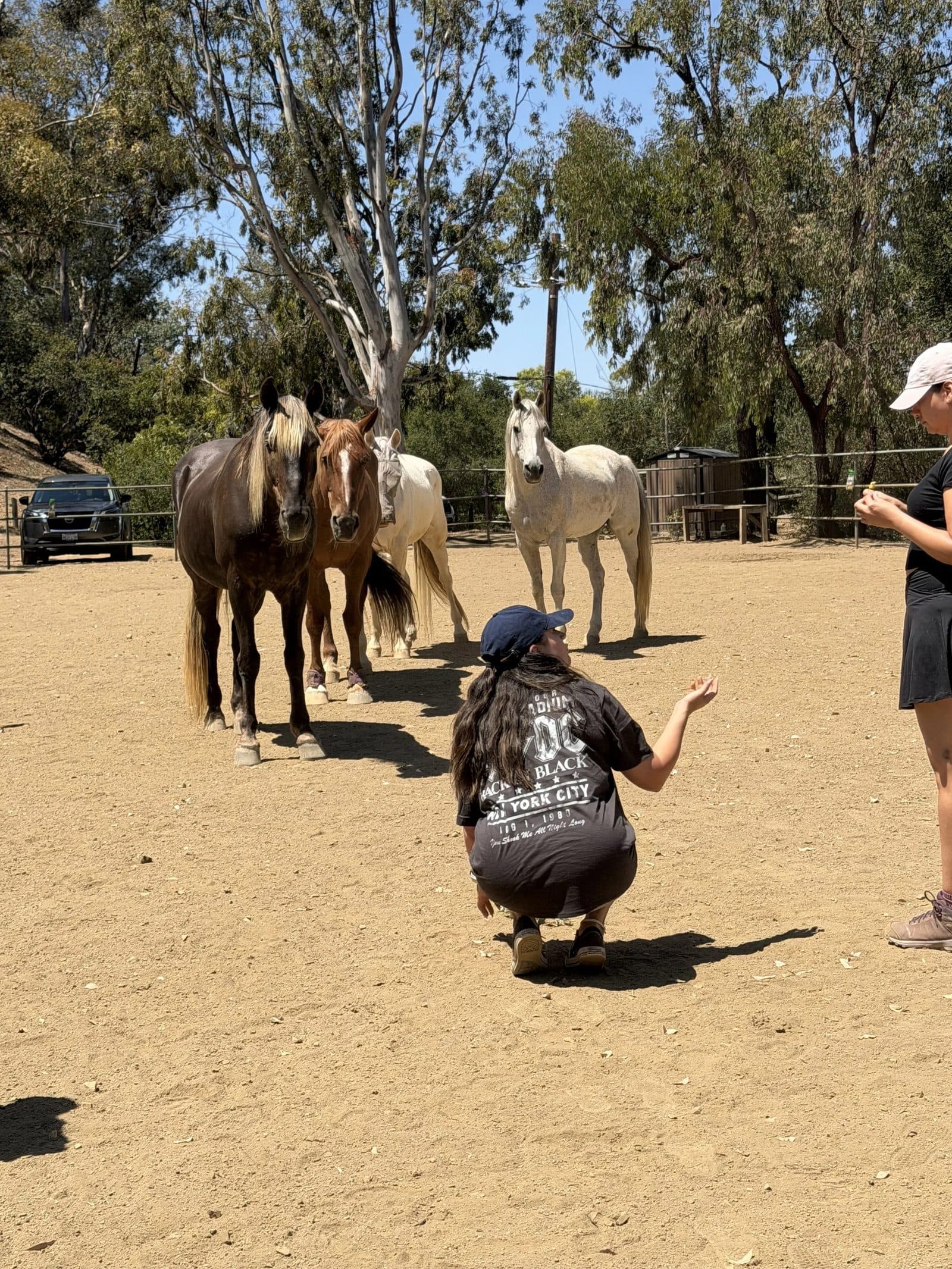
Mirroring is the word for something horses do without being asked. A horse responds to the state a person is actually in rather than to what they say or intend, so the way it behaves near somebody becomes information about them. Arrive braced and holding it together, and the horse answers the bracing.
What makes it useful here is that the herd does not respond uniformly. Each of these four is tuned to something different, and what they show you arrives through their own temperament.
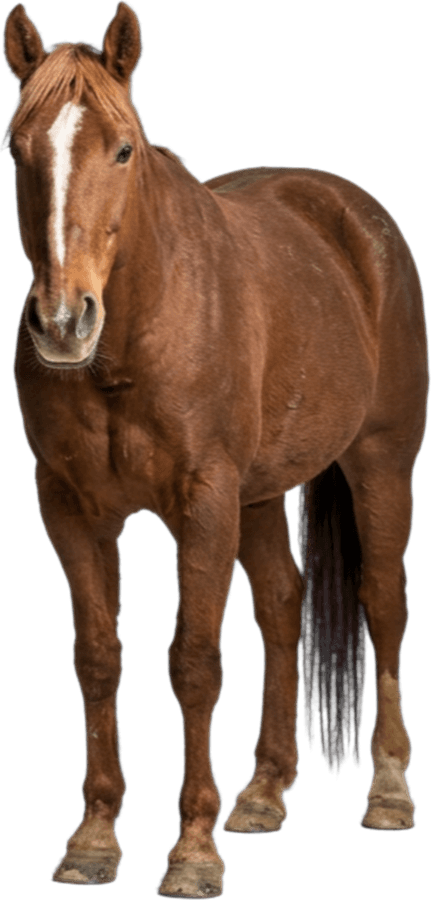 SophieThe Lead MareTakes in someone's anxious or unsettled energy and hands it back grounded and calm.
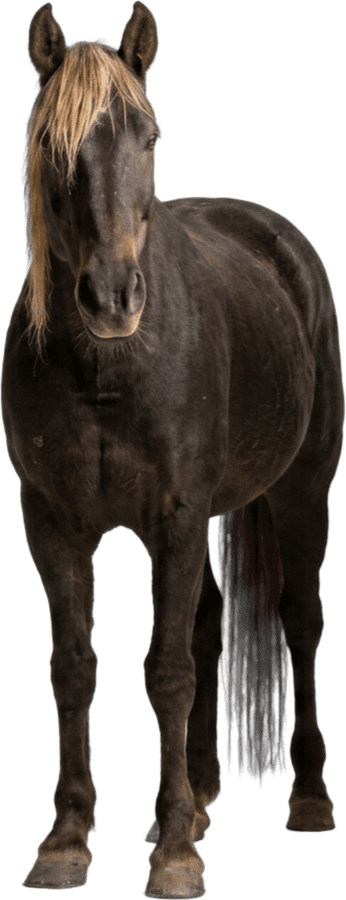 CashThe Straight ShooterIdentifies exactly what a person or a group is avoiding, or where they lack boundaries.
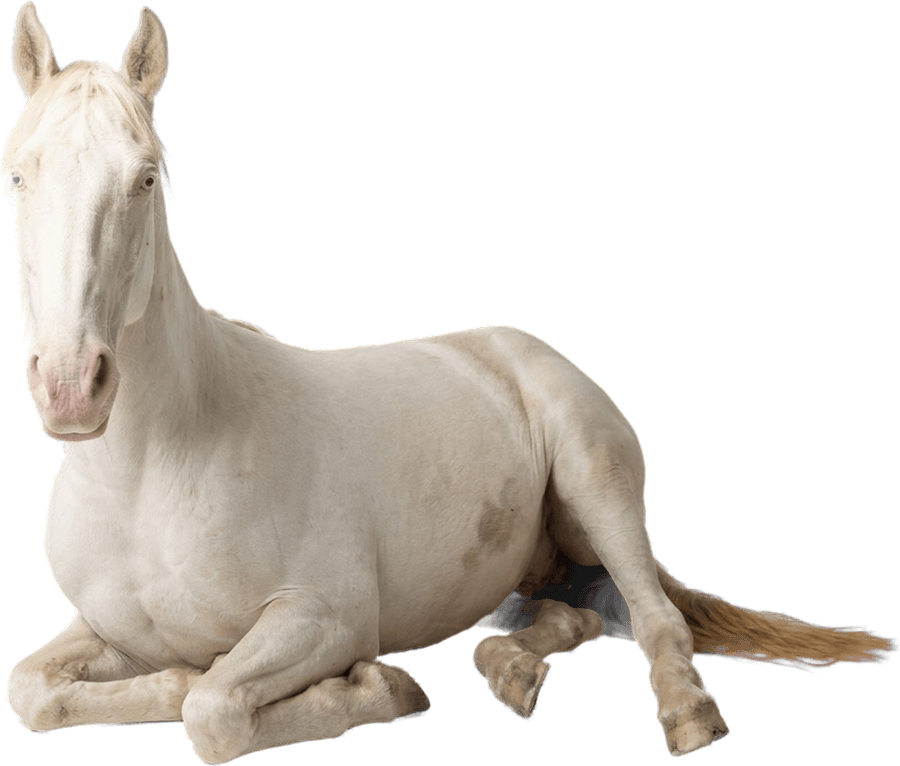 FrankieThe IcebreakerThe fastest of the herd to approach someone new, and the usual starting point for anyone nervous about horses at all.
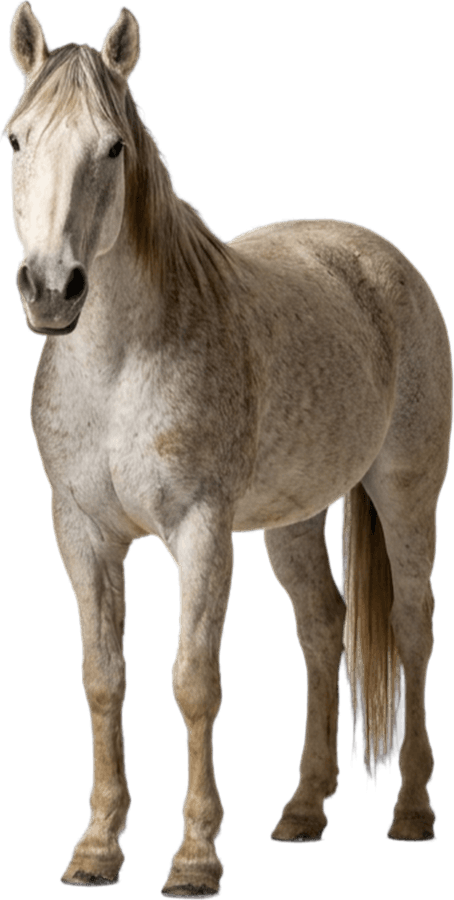 AbeThe Steady OneA steady, unshakeable presence that a group arriving already running hot can borrow from.
Which of them comes over, and how, is part of the work. Meet the herd.
Who teaches it
The people who teach it, and who holds the license
Rose Mary Riggs, a Certified Equine Guided Educator, built the program and leads both levels. Angela Schellenberg, MA, LMHC, LPC, LPCC, is the licensed psychotherapist on the team and co-leads Level 1. Dr. Emma Barnosky, PhD, SEP, leads Level 2 with Rose Mary, and Eloisa Ribeiro certified here and is on staff. Every one of them is on the ground with the herd, not behind a lectern.
Where does this lead?
“So many of my students have gone on to either create their own business, or become a staff member here at Equine Therapy Malibu.”
Rose Mary Riggs
Founder & Owner. Two decades with horses in these mountains, after a career in change management at Accenture.
Both levels, from the inside
“At the end of my certification I truly felt confident and competent running groups on my own.”
Dr. Emma Barnosky, PhD, SEP
Lead facilitator, trainer and program director. Certified here first.
What was it actually like?
“She champions each one of us to find your own gifts, your own voice, and your own way of bringing this work out into the world.”
Eloisa Ribeiro
Equine Assisted Learning Facilitator. Certified here in 2025, now on staff.
Why a clinician does this
She specializes in grief, PTSD and complex trauma, and she brought that practice out here.
Angela Schellenberg, MA, LMHC, LPC, LPCC
Co-leads Level 1 with Rose Mary. Her Healing with Horses retreat at the ranch was recognized by National Geographic.
What is claimed here
Promising, and early
“Our approach is grounded in trauma-informed practice and informed by emerging research, but it isn’t confined to a classroom or a prescribed method.”
Before you put your name near this, here is what is being asserted, plainly. What the research is beginning to show is physiological and it is measured rather than felt: heart rate variability in a horse and in the person alongside it synchronize, and which of the two is leading shifts with what is happening between them and with how well they know each other. The horse’s own physiology is measured in that work too, which is the evidence behind treating the animal as a participant rather than as equipment.
That is evidence that something real passes between two nervous systems. It is not evidence that this treats a condition, and we do not claim that it does. The outcome literature in this field is mostly small and mostly uncontrolled, you would find that out in an afternoon, and we would rather say it here than have you find it. What we describe is what happens, and the meaning of it is made by the person it happened to.
For a whole staff
Bring your clinical team
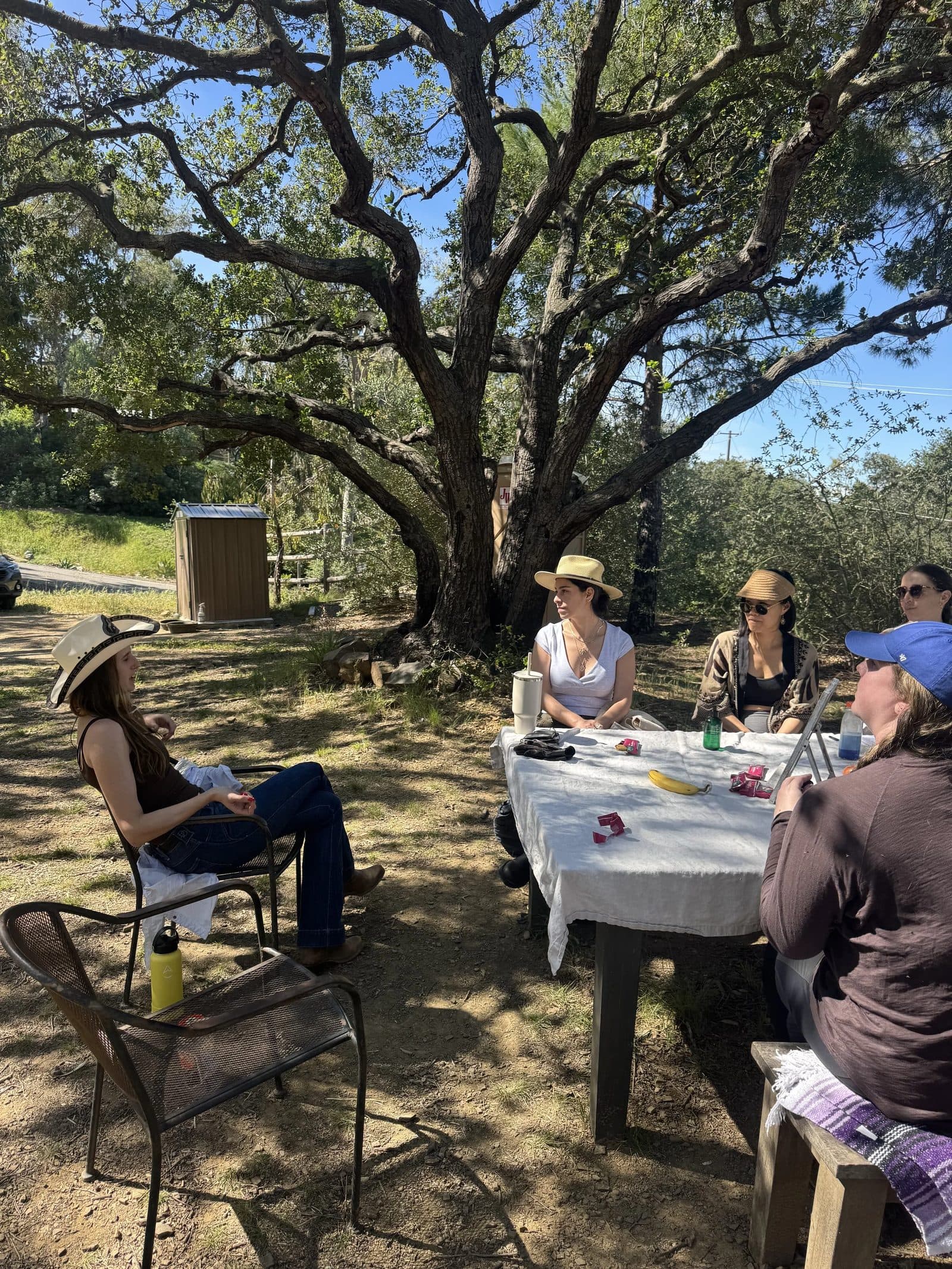
Some of the work we are proudest of is the training a whole staff comes to together. We run it over several days for a single organization’s own people, built around the service that organization actually runs rather than adapted from somebody else’s program, and everyone who finishes can go on toward certification.
A treatment center, a group practice and a county service do not want the same days, and the difference between them is wide enough that there is no shelf to take this off. So it starts with a call, and then a proposal written from what we heard on it.
By arrangement
Tell us about your service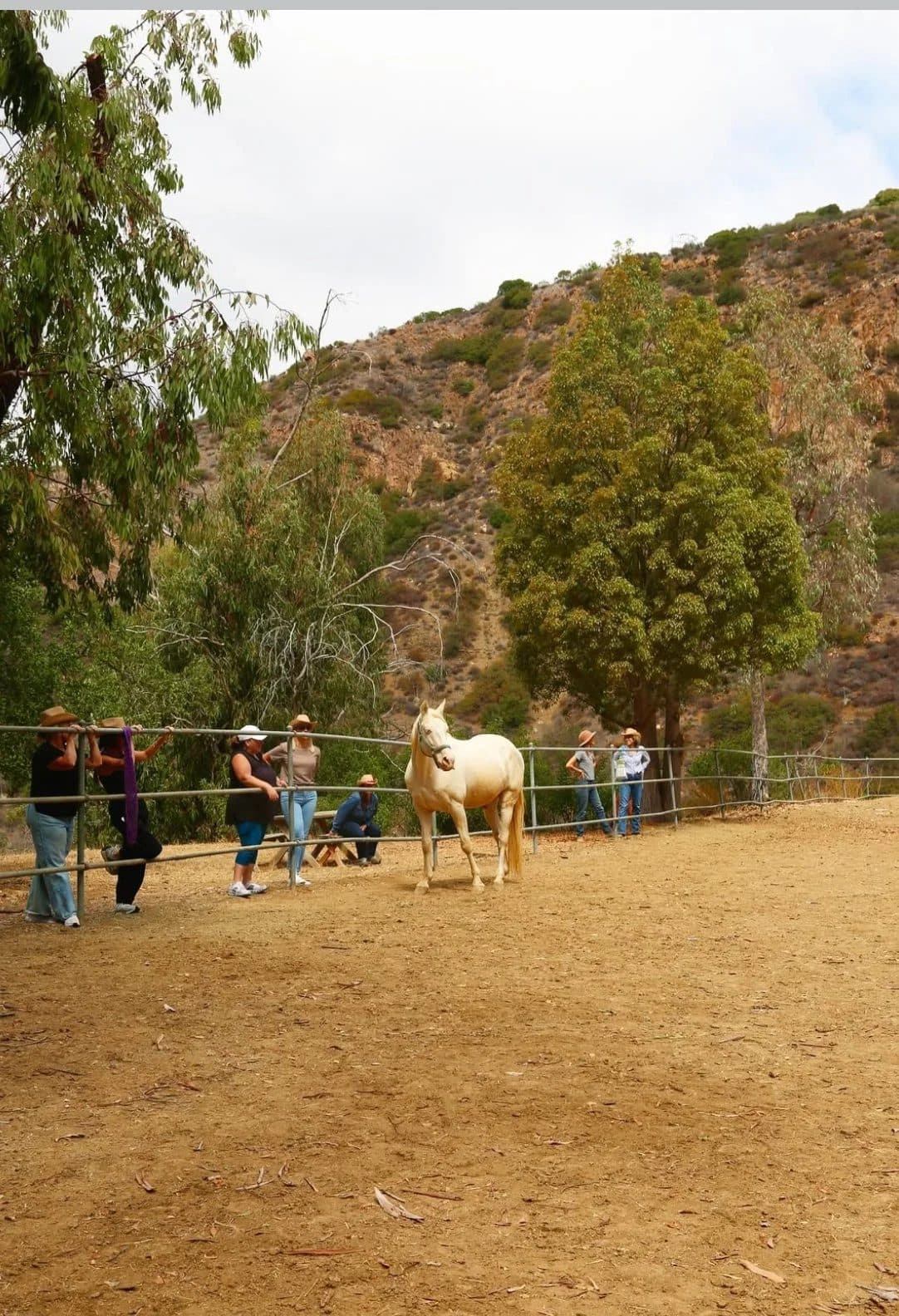
If you are not here to train
Sending us somebody you see
Clinicians also write about a client rather than about themselves. Tell us what you are hoping the work might open, and who is holding that person’s care, and we will say plainly whether what we would be doing is learning or clinical work, and which of us would be with them. Where it is clinical, it is Angela. Where it is learning, we will say so, and you stay the clinician on the case.
Write to us about a clientWhat people say about working with Rose Mary

“Rose Mary has the ability to help each person she works with to see the best in themselves and others.”
Julie McAfee, Women’s Empowerment Coach
Questionsclinicians ask
Is this therapy, or is it something else?
It is both, and the difference is worth being exact about. Equine assisted learning is experiential work on communication, relational patterns, leadership and presence under pressure.
It is not psychotherapy, and it is what corporate & private groups and institutions are booking.
Equine assisted therapy sessions are also experiential. Private, couples, and group or treatment center sessions are guided by Certified Shakti Ranch EAL Facilitators.
Do I need to be a licensed therapist or clinician?
No. You do not need to be a therapist, a coach, or hold any clinical license or credential. Level 1 is open to anyone, and Level 2 is open to anyone who has completed Level 1.
What changes without a license is not whether you may do this work, but what you may call it and who you should refer on. Equine Assisted Learning is learning rather than treatment, and holding that distinction is part of what the certification teaches.
What does the certification actually qualify me to do?
Graduates are Shakti Ranch Certified EAL Facilitators. That is a qualification to integrate horses into work you are already trained and licensed to do. It is not a license to practice psychotherapy, and it does not stand in for one. The two-part path is taught by Rose Mary Riggs, Emma Barnosky, PhD, SEP, and Angela Schellenberg.
Can my whole organization train together?
Yes, and it is some of the work we are proudest of. We run the training for a single organization’s own staff, built around what that service actually needs rather than adapted from somebody else’s program. It starts with a call. Tell us about your organization and we will take it from there.
Something not here? Write to us and we will answer it properly.